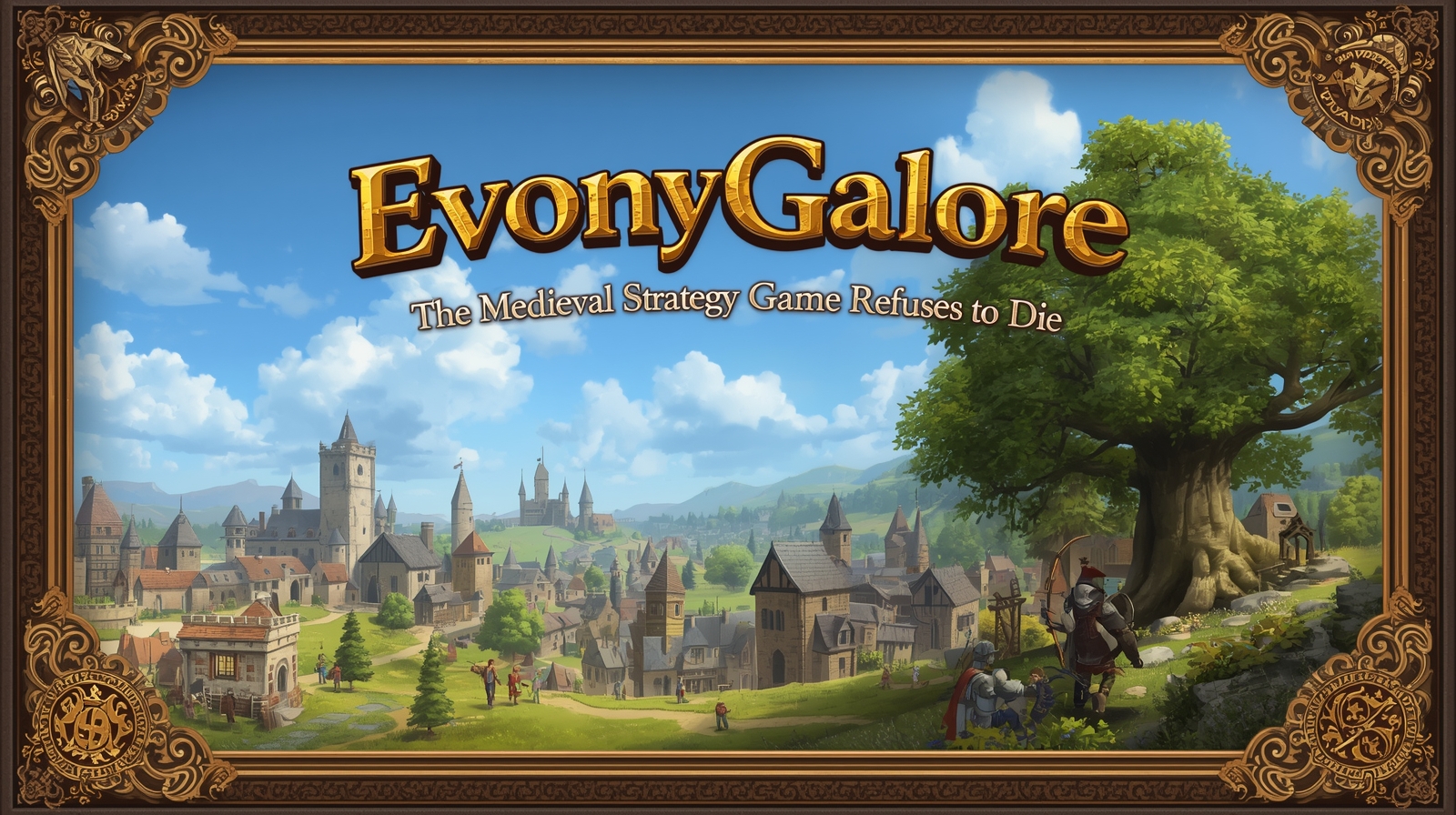
When Evony first launched back in 2009, nobody could’ve predicted it would still be pulling in players sixteen years later. The game arrived during an awkward phase for browser-based games, squeezed between the Flash era and the mobile revolution that was about to reshape everything. Yet here we are, and Evony’s still kicking around with a dedicated player base that spans continents and timezones.
I’ll be honest with you – my first encounter with Evony came through those infamous advertisements that plastered gaming sites in the early 2010s. You probably remember them too, even if you’d rather not. The marketing campaign had virtually nothing to do with actual medieval strategy, which made the real game something of a pleasant surprise once you got past the bait-and-switch feeling.
Building Your Kingdom From Scratch
The game drops you into control of a modest keep with barely enough resources to get by. Your primary concern becomes managing four essential resources: wood, food, stone, and iron. These aren’t just arbitrary numbers on a screen – they form an interconnected economic web where neglecting one resource inevitably creates problems elsewhere.
My first attempt at city-building ended in near-disaster because I got obsessed with military structures while my food production languished. Turns out starving citizens don’t make particularly effective soldiers, who knew? The resource management layer forces you to think several moves ahead, constantly balancing immediate needs against long-term strategic goals.
Wood fuels construction projects and keeps your city expanding. Food feeds your growing population and sustains military campaigns that can stretch for days. Stone provides the foundation for defensive structures and advanced buildings. Iron powers your military-industrial complex, enabling weapon production and troop training.
What seperates casual players from serious strategists is understanding how these resources flow into each other. You can’t just max out iron production and call it a day – your troops need food, your mines need workers, and workers need housing built from wood and stone.
The Chess Game of Medieval Warfare
Combat in Evony operates on principles that seem simple at first glance but reveal tremendous depth once you dig into the mechanics. The basic troop types – cavalry, archers, infantry, and siege weapons – create a rock-paper-scissors dynamic that’s easy to grasp but challenging to master in practice.
Cavalry units excel at mobility and flanking maneuvers, crushing archers who can’t escape their charge. Archers rain death from distance, picking apart infantry formations before they close to melee range. Infantry holds the line against cavalry charges while remaining vulnerable to sustained arrow volleys. Siege weapons demolish fortifications but need protection from pretty much everything else.
The real strategy emerges when you start combining unit types and considering battlefield positioning. A well-placed archer formation supported by infantry can hold off cavalry charges that would otherwise sweep through your forces. Siege weapons protected by mixed troop compositions can crack open defenses that seemed impenetrable.
I remember watching an alliance mate lose a battle they should’ve won handily because they sent pure cavalry against a prepared defensive position. The defender had positioned archers behind infantry, creating overlapping fields of fire that turned the cavalry charge into a massacre. Numbers matter, sure, but composition and tactics matter more.
Heroes Change Everything
The introduction of heroes and their special abilities fundamentally altered Evony’s combat calculations. Suddenly you weren’t just managing troop numbers – you had to consider hero combinations, ability cooldowns, and timing windows for maximum impact.
Each hero brings unique abilities that can swing battles in unexpected directions. Some heroes excel at buffing friendly troops, turning mediocre units into juggernauts. Others specialize in debuffing enemies or dealing massive direct damage. The hero meta-game has become its own strategic layer, with players constantly experimenting with new combinations.
One particularly memorable siege saw my opponent’s hero abilities completely neutralize my traditional turtle-and-strike approach. They’d brought heroes specifically designed to counter defensive playstyles, forcing me to completely rethink my strategy mid-battle. That kind of adaptability seperates the good players from the great ones.
Alliance Politics: The Real End Game
Here’s where Evony gets really interesting – the social dynamics and alliance politics that emerge from hundreds of players competing for limited territory and resources. Alliances aren’t just friendly groups who help eachother out occasionally. They’re complex political entities with internal hierarchies, strict rules, and distinct cultures that develop over time.
Some alliances pursue peaceful development strategies, focusing on economic growth and mutual protection. Others embrace aggressive expansion, constantly seeking new conquests and territorial control. Most fall somewhere in between, adapting their approach based on server politics and neighboring threats.
The diplomatic layer adds dimensions to gameplay that pure strategy games can’t replicate. You’ll find yourself negotiating ceasefires, forming temporary coalitions against common threats, and occasionally backstabbing former allies when circumstances demand it. The game’s social aspects often mirror real-world international relations on a compressed timescale.
Late Game Resource Optimization
Once you’ve established yourself and expanded beyond your initial city, resource management transforms into an optimization puzzle. Managing multiple cities requires specialization strategies – one city focused on food production, another maximizing iron output, a third serving as your military staging ground.
The challenge shifts from basic survival to efficiency maximization and coordinated logistics. Moving resources between cities costs time and involves risk if hostile players control the territory between them. Alliance members often coordinate their city specializations to create supply chains that benefit the entire group.
Smart players develop trade routes and market timing strategies that leverage the in-game economic system. Prices fluctuate based on supply and demand just like real markets, creating opportunities for players who pay attention to trends. I’ve seen players amass fortunes by buying low during peaceful periods and selling high when wars drain server-wide resources.
Events and Seasonal Content Keep Things Fresh
Evony’s developers regularly introduce events and seasonal content that disrupt standard gameplay patterns. These events force adaptation and strategic flexibility, often bringing unique challenges that can’t be solved with your usual approaches.
Seasonal events might introduce special resources, powerful temporary units, or unique building opportunities. They create windows where conventional power dynamics get temporarily upended, allowing smaller players to punch above their weight if they adapt quickly.
The dynamic nature of events prevents the game from stagnating even for veteran players who’ve mastered standard strategies. Temporary alliances form around event objectives, sometimes bringing together players who’d normally be mortal enemies. These shifting allegiances add unpredictability that keeps the meta-game constantly evolving.
Research Trees and Long-Term Planning
The research system presents meaningful choices with lasting consequences. You can’t max out everything – decisions about whether to prioritize military technology, resource production, or city development create divergent paths that shape your entire gameplay experience.
Military-focused research unlocks stronger units and combat abilities but leaves your economy vulnerable. Economic research boosts production but means falling behind militarily. Balanced approaches avoid weaknesses but never achieve the specialized strengths that dominate particular niches.
These choices matter precisely because they can’t be easily reversed. Committing to a research path means living with that decision for weeks or months of real time. The permanent nature of these choices adds weight to strategic planning that extends far beyond individual battles.
Why Evony Endures
Despite fierce competition in the mobile strategy game market, Evony maintains a loyal player base because it delivers genuine strategic depth wrapped in accessible mechanics. The game rewards both military prowess and diplomatic skill, offering multiple paths to success that accommodate different playstyles.
New players can still find their footing and build competitive kingdoms through smart play and alliance selection. Veterans continue discovering new tactical wrinkles and strategic approaches even after years of play. That balance between accessibility and depth keeps the gameplay loop engaging across experience levels.
The medieval strategy experience that Evony delivers has evolved considerably since those controversial early advertisements, but the core identity remains intact. It’s a game about building kingdoms, forging alliances, and outmaneuvering rivals through superior planning and execution. Sixteen years later, that formula still works.