When Jon M. Chu decided to split the Wicked adaptation into two films back in April 2022, plenty of skeptics wondered if it was really necessary or just a cynical cash grab. But after experiencing Wicked: For Good, the 2025 sequel that adapts the second act of Stephen Schwartz’s beloved stage musical, it becomes crystal clear why this story needed room to breathe. This isn’t just another franchise extension—it’s a genuine attempt to explore the complicated friendship between Elphaba and Glinda in ways the stage version never could, even if the results have proven more divisive than its predecessor.
Released on November 21, 2025, Wicked: For Good picks up exactly one year after Elphaba’s iconic “Defying Gravity” moment, finding her branded as the Wicked Witch of the West while Glinda awkwardly plays spokesperson for the very regime her best friend is fighting against. With Cynthia Erivo and Ariana Grande reprising their roles alongside Jonathan Bailey, Michelle Yeoh, and Jeff Goldblum, the film earned $147 million in its opening weekend—the biggest debut for any Broadway adaptation in history. Yet despite that commercial success and a respectable $397 million worldwide gross, the critical reception has been notably cooler than Part 1, with a 67% Rotten Tomatoes score compared to the first film’s warmer embrace.
Understanding the Title: Why “For Good” Matters
The decision to subtitle this sequel “For Good” rather than simply calling it “Part Two” wasn’t arbitrary, though some international markets still use the latter designation. The title references one of the musical’s most emotionally devastating numbers, the penultimate duet where Elphaba and Glinda acknowledge how profoundly they’ve changed each other—”for good” carrying both the meaning of “forever” and “for the better.” It’s a song that has made countless theater audiences weep since 2003, and Chu defended this title choice repeatedly, insisting it was always the right name for a film about transformation, sacrifice, and the complicated legacy of friendship.
In interviews, the director explained that “For Good” encapsulates the entire thematic arc of what this second film accomplishes. Where the first movie was about discovery and defiance, this one grapples with consequence and compromise, showing how Elphaba’s rebellion has reshaped not just her own life but the entire Land of Oz.
The Story: Where Darkness Takes Root
Wicked: For Good doesn’t waste time easing audiences back into Oz. We’re immediately thrust into a world where Madame Morrible’s propaganda has turned Elphaba into public enemy number one, forcing her to operate from a forest hideout while battling for Animal rights—the cause that started her whole journey toward “wickedness” in the first place. Meanwhile, Glinda has settled into an uncomfortable role as the Wizard’s spokesperson, engaged to Fiyero Tigelaar (Jonathan Bailey), who’s now Captain of the Gale Force but clearly harboring doubts about hunting the woman he once befriended.
The film expands significantly on plot points that flash by quickly in the stage musical. One of the most affecting additions shows Animals—including Elphaba’s former nanny Dulcibear, voiced by Sharon D. Clarke—preparing to flee Oz entirely, having lost hope that things will improve. Elphaba tries desperately to rally them with a new song called “No Place Like Home,” co-written with Cynthia Erivo herself, but her efforts backfire spectacularly when the Cowardly Lion appears and reveals to the departing Animals that Elphaba is actually responsible for creating the Wizard’s flying monkey spies. It’s a brutal moment that the stage version never had time to explore, showing how Elphaba’s good intentions have created genuine harm even as she fights against oppression.
The Nessarose subplot receives substantial attention here, and it’s where the film makes some of its most thoughtful departures from the source material. Elphaba visits her sister, who has inherited their father’s governorship of Munchkinland and has grown increasingly authoritarian, even prohibiting Munchkins from leaving via a decree at the train station. Nessarose’s unrequited obsession with Boq Woodsman (Ethan Slater) leads her to attempt a love spell using Elphaba’s Grimmerie, but she miscasts it catastrophically, shrinking Boq’s heart. Elphaba’s attempt to save him transforms him into the Tin Man in a genuinely disturbing sequence that required four hours of prosthetic application for Slater, designed by Mark Coulier as an homage to Jack Haley’s 1939 portrayal.
What the film does brilliantly—and this is where it actually improves on the stage musical—is keeping the enchantment of Nessarose’s shoes focused on flight rather than walking. The original show had Elphaba give Nessa the ability to walk, which actress Marissa Bode (who uses a wheelchair) and the creative team recognized as problematic, perpetuating the idea that disability needs “fixing.” Instead, Nessa gains the ability to fly, which feels magical and empowering without the ableist implications. It’s a small change that speaks volumes about how the filmmakers approached adaptation—always asking whether something could be done better, more thoughtfully.
When Dorothy Enters: The Expanded Role
One of Chu’s most discussed decisions was giving Dorothy Gale a more prominent role than she has in the stage musical, where she’s barely a presence. Here, we see her arrival in Oz (transported by the tornado that kills Nessarose), her initial meeting with the Wizard, her journey to hunt Elphaba, and even her attempt to leave Oz in the Wizard’s hot air balloon. Yet remarkably, we never clearly see her face—just fleeting glimpses through doorways or from behind.
This choice has divided audiences, but there’s actual thematic logic to it. By keeping Dorothy’s face obscured, the film maintains its focus on Elphaba and Glinda as the true protagonists of this story, refusing to let the iconography of Judy Garland’s Dorothy overshadow the complex women we’ve been following for nearly five hours across two films. It’s a bold gambit that doesn’t entirely work—sometimes it just feels gimmicky—but you can respect what Chu was attempting.
The sequence where Dorothy douses Elphaba with water, apparently melting her in front of the mob, is staged with genuine horror. We’ve spent so much time with this character, understanding her motivations and pain, that watching a confused farm girl unknowingly commit what appears to be murder lands with real emotional weight. Of course, Elphaba has faked her death—she emerges from a trap door at Kiamo Ko after everyone leaves—but the film makes you feel the tragedy of what the people of Oz believe they’ve done.
How the Musical Changes Work (and Sometimes Don’t)
Stephen Schwartz has been clear that any changes from the stage version needed to be “additive”—enhancing character or story rather than just being different for difference’s sake. The two new songs largely accomplish this goal, even if they’re not instant classics like the original score’s heavy hitters.
“No Place Like Home,” performed by Erivo with her typical powerhouse vocals, gives Elphaba a moment to articulate why she keeps fighting even when it seems hopeless. The song interpolates melodies from “The Wizard and I,” reminding us of the naive girl who once dreamed of working alongside the Wizard, creating a poignant contrast with the hardened revolutionary she’s become. Co-writing this with Erivo was a smart move—she knows this character inside and out, and it shows in lyrics that feel genuinely personal.
“The Girl in the Bubble” might actually be the more interesting addition, though. Placed between the two sections of “March of the Witch Hunters,” this Glinda solo finds Ariana Grande’s character confronting the hollowness of her carefully constructed public image. The “bubble” references both her literal transportation method and the metaphorical bubble of privilege and lies she’s been living in. Grande’s performance here is surprisingly raw—this isn’t the bubbly, comedic Glinda we met in Part 1 but someone genuinely reckoning with complicity. The staging, with Glinda alone in a spotlight while projections of her smiling face surround her, drives home how trapped she is by her own popularity.
The film also adds substantial material to “Wonderful,” the Wizard’s manipulation song. Here, Glinda joins in partway through, and we watch her almost convince herself that working within the system is the right choice. Jeff Goldblum leans into the Wizard’s pathetic desperation, especially once he realizes (through the green elixir bottle) that Elphaba is actually his biological daughter—the reason for her power and his inadvertent responsibility for everything that’s happened. It’s a reveal that the stage version includes but never quite lands with the same devastating impact.
Not every expansion works perfectly. The wedding interruption sequence, where Elphaba frees the Animals from their cages beneath the Wizard’s stronghold and they stampede through Glinda and Fiyero’s ceremony, feels a bit chaotic and undercooked considering how important that moment should be. We needed more time watching Elphaba make the decision to disrupt the wedding, understanding what she’s sacrificing by forcing this confrontation.
The Performances: Erivo and Grande’s Complex Dynamic
Cynthia Erivo’s performance in Wicked: For Good is notably different from her work in Part 1. Where she previously played Elphaba’s vulnerability and earnest desire to be accepted, here she fully embraces the hardened warrior the world has forced her to become. Her rendition of “No Good Deed”—performed live on set, as all the vocals were—is absolutely searing, a woman at the end of her rope deciding that if everyone insists she’s wicked, she might as well embrace it. The live recording technique, pioneered by Simon Hayes on Les Misérables and adapted here, captures a rawness that pre-recorded vocals could never achieve.
Ariana Grande continues to surprise people who dismissed her casting as stunt casting. Her Glinda is genuinely trying to do good within impossible circumstances, and Grande makes you feel every compromise eating away at her soul. The moment where she finally confronts Madame Morrible about the tornado that killed Nessarose, only to be completely rebuffed, plays out almost entirely on Grande’s face. This is a woman realizing she’s been a puppet all along.
Their duet on “For Good” is obviously the emotional centerpiece, and both actresses commit fully to the heartbreak of two people who love each other but can’t find a way to stay together. The scene is staged simply—just two women in a castle room, saying goodbye—because anything more elaborate would distract from the raw emotion. By the time Glinda watches Dorothy apparently melt Elphaba with water, her grief feels utterly genuine because we’ve watched this friendship slowly tear itself apart across two entire films.
Jonathan Bailey brings unexpected depth to Fiyero’s transformation from conflicted soldier to someone willing to sacrifice everything for love. The sequence where the Gale Force savagely beats him in a field while Elphaba escapes is brutally effective, and his subsequent transformation into the Scarecrow (accomplished through Elphaba’s desperate magic) carries real pathos. This is a man who chose love over duty and paid a terrible price, even if Elphaba’s spell ultimately saves his life.
Jon M. Chu’s Production Philosophy
The behind-the-scenes story of how these films were made is almost as interesting as the films themselves. Chu’s insistence on practical effects and real locations wherever possible gives Wicked: For Good a tangible quality that pure CGI could never achieve. Those nine million tulips planted around Munchkinland? Actually real. The Yellow Brick Road paved into the ground? Actual bricks laid with real mud. When actors walk through these environments, they’re responding to something genuine rather than imagining it all against green screens.
Chu has cited Steven Spielberg’s Hook as a major inspiration, and you can see that influence in the ambitious scale of the practical sets. The Governor’s Mansion in Munchkinland was constructed using repurposed elements from Shiz University’s library and Madame Morrible’s office from the first film—a clever bit of production design by Nathan Crowley that creates visual continuity while suggesting how Oz’s institutions all serve the same oppressive purposes.
The decision to pause post-production on Part 2 throughout most of 2024 so Chu could finish Part 1 first was crucial. He needed to understand how the first film’s story landed before he could properly shape the conclusion, adjusting the edit of For Good to follow through on emotional beats established in the predecessor. Editing wrapped in October 2025, just barely in time for the November release.
One fascinating technical detail: Chu actually edited portions of the film remotely using Apple’s Vision Pro headset when LA floods prevented him from reaching the edit room. Working with editor Myron Kerstein through Evercast, he was able to review footage on a virtual giant screen and make cuts on a major motion picture from his house. It’s the kind of workflow breakthrough that might seem like a gimmick but actually proved remarkably effective for high-stakes, deadline-driven post-production work.
The Darker Visual Aesthetic
Cinematographer Alice Brooks and production designer Nathan Crowley made deliberate choices to give For Good a darker, more oppressive visual palette than Part 1. Where the first film embraced the colorful wonder of Oz—all those vibrant tulips and the gleaming Emerald City—this sequel leans into shadows and muted tones, reflecting how the land has changed under the Wizard and Morrible’s increasingly authoritarian rule.
Chu has mentioned “The Truman Show” and “Pleasantville” as influences on how both films portray Oz, particularly in terms of showing a younger generation beginning to see through the lies they’ve been taught. That thematic idea of awakening becomes literal in the film’s final sequence, when Glinda publicly admits the Animals back into Ozian society and restores their voices. It’s a hopeful ending, but one earned through tremendous suffering and loss.
Box Office Success Amid Mixed Reviews
The financial performance of Wicked: For Good has been strong if not quite spectacular. That $147 million opening weekend represented the biggest debut for any Broadway adaptation, surpassing even its predecessor’s $112.5 million bow. It ranked as the second-biggest opening of 2025 behind A Minecraft Movie and the third-biggest opening for a musical film behind Disney’s live-action remakes of The Lion King and Beauty and the Beast.
However, the film’s legs weren’t quite as strong as Universal hoped. By early December 2025, the worldwide total sat at $397 million against a $150 million production budget—profitable, certainly, but not the runaway phenomenon Part 1 became. Part of this can be attributed to the cooler critical reception. Where Part 1 felt like a revelation to many viewers, Part 2 has been described as darker, slower, and less immediately accessible.
The Rotten Tomatoes score of 67% represents a significant drop from Part 1’s warmer reception, with critics divided on whether the film’s more somber tone and expanded runtime (137 minutes) served the story or weighed it down. Justin Chang’s review in The New Yorker criticized the film for being “so cowed by its iconic predecessor” (meaning both the 1939 Wizard of Oz and the stage musical) that it becomes almost destructive in trying to outdo what came before. Donald Clarke of The Irish Times was even harsher, giving it two stars and complaining about the “stomach-unsettling” visual aesthetic that he compared to “a giant toddler vomiting candyfloss all over Walt Disney World.”
Yet audiences who loved Part 1 have largely embraced the sequel, giving it an “A” CinemaScore and a 92% positive score on PostTrak. The disconnect between some critics and general audiences isn’t surprising—Wicked: For Good is fundamentally a film for people invested in these characters and their journey, not casual viewers looking for light entertainment.
The Marketing Machine (Slightly Scaled Back)
Interestingly, Universal scaled back its direct promotional spending for For Good compared to Part 1, allocating $90 million versus the first film’s $150 million budget. However, the studio compensated through brand partnerships, securing over 400 partners who contributed an estimated $330 million in media value—the second-largest promotional spend ever for a Hollywood tentpole, just shy of Part 1’s record-breaking $350 million.
The trailer release strategy was particularly clever. After declining to debut during Super Bowl LIX due to VFX complications, the first For Good trailer premiered at CinemaCon on April 2, 2025, before getting a public release on June 4 through a one-night theatrical re-release of Part 1. This gave die-hard fans an exclusive first look while also driving people back to theaters to rewatch the first film. The strategy worked—the trailer racked up 113 million views in its first 24 hours, significantly outpacing Part 1’s 75 million.
Cross-promotional events included a “Wicked Night” on Dancing with the Stars where Chu served as guest judge, and “Wicked: One Wonderful Night,” an NBC special featuring the cast performing songs from both films live from the Dolby Theatre. These events kept Wicked in the cultural conversation throughout the fall of 2025, even if they couldn’t quite recreate the overwhelming “Wickedmania” that accompanied the first film’s release.
What Wicked: For Good Gets Right
Despite the mixed critical response, there’s a lot to admire in what Chu and his team accomplished. The commitment to exploring Elphaba and Glinda’s relationship with genuine emotional complexity elevates the material beyond typical blockbuster fare. These are two women who genuinely love each other but have fundamentally incompatible visions for how to create change in Oz. That’s a more nuanced conflict than most franchise films attempt.
The film’s focus on Animal rights through to the very end—culminating in Glinda’s public restoration of their voices and jobs—gives the story political weight that resonates beyond the fantasy setting. The Animals represent any marginalized group whose basic rights and dignity are stripped away by authoritarian governments, and Elphaba’s willingness to be branded a terrorist rather than abandon them feels genuinely heroic.
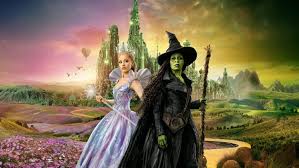
The final image of the Grimmerie opening for Glinda, suggesting she now has access to the magic that always seemed beyond her reach, is quietly profound. Throughout both films, Glinda has relied on charm and popularity while Elphaba wielded raw power. But in the end, it’s Glinda who must pick up the work of actually governing and healing Oz, and the Grimmerie recognizing her worthiness feels earned. The recreation of the original Broadway poster—Elphaba and Glinda in profile, facing each other—as the final shot brings everything full circle beautifully.
The Legacy Question
As the dust settles on this two-part adaptation, the question becomes whether splitting the musical into two films was ultimately justified. The answer probably depends on what you value in adaptations. If you believe the goal is to translate the stage version as faithfully as possible while using film’s unique capabilities, then yes—these movies accomplish that goal more fully than a single three-hour film ever could have.
But if you think adaptations should streamline and refocus material for a new medium, you might argue that some of the added material feels indulgent. Do we really need extended sequences of Animals building the Yellow Brick Road, or Dorothy preparing to meet the Wizard? There’s a version of this story that could’ve been told more efficiently.
What’s undeniable is that Cynthia Erivo and Ariana Grande have created definitive screen interpretations of these roles. Future productions of the stage musical will inevitably be influenced by choices they made, just as the show’s original stars Idina Menzel and Kristin Chenoweth shaped how the roles were understood for two decades.
The National Board of Review’s decision to name Wicked: For Good one of the best films of 2025 suggests that at least some critics recognized the ambition and emotional sincerity of what Chu accomplished, even if it didn’t achieve the universal acclaim of Part 1. Sometimes the second part of a story, the part dealing with consequences and compromise rather than discovery and defiance, is harder to love—but that doesn’t make it less important.
In the end, “For Good” is an appropriate title for a film about how people change each other in permanent, irreversible ways. Wicked: For Good may not be perfect, but it completes Elphaba and Glinda’s journey with genuine emotional honesty, and that’s worth more than any number of box office records or Rotten Tomatoes scores.