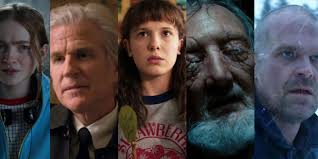
When Netflix dropped Stranger Things on July 15, 2016, nobody could’ve predicted that a group of relatively unknown child actors alongside a 90s icon would become one of the most recognized ensembles in television history. The Duffer Brothers took a massive gamble casting young performers who’d barely scratched the surface of Hollywood, trusting that authentic chemistry would trump established star power. That gamble paid off in ways that reshaped not just Netflix’s original programming strategy but the entire landscape of how streaming platforms approach ensemble casting.
What made this particular group special wasn’t just their individual talents, though those were undeniable. It was something harder to manufacture: the genuine sense that these kids actually liked each other, that their on-screen friendships reflected real bonds formed between takes in Atlanta’s humid summer heat. Over five seasons spanning nearly a decade, we’ve watched them grow up in real time, navigating adolescence under the brutal spotlight of global fame while simultaneously bringing to life characters facing supernatural horrors in the fictional town of Hawkins, Indiana.
This comprehensive look at the Stranger Things cast explores not just who these actors are, but how they got here, where they’re going, and why their collective journey matters in the broader context of Hollywood’s evolution.
Millie Bobby Brown as Eleven: The Girl Who Changed Everything
Before Stranger Things, Millie Bobby Brown was this close to giving up on acting entirely. She’d been rejected from role after role, including parts in Game of Thrones and other major productions. Her family had moved from England to Los Angeles specifically to support her career, and the financial strain was becoming unbearable. Then came the audition for a girl with psychokinetic abilities who’d spent her childhood as a human test subject in a secret government laboratory.
The Duffer Brothers needed someone who could convey complex emotions with minimal dialogue, since Eleven barely spoke in early episodes. Brown’s audition tape showed her shaving her head on camera, a bold choice that demonstrated her commitment. More importantly, she brought this raw vulnerability mixed with barely contained power that made Eleven feel dangerous and fragile at the same time. She was cast at just eleven years old, and suddenly everything changed.
Her performance in that first season earned her an Emmy nomination at age thirteen, making her one of the youngest nominees in that category’s history. But what’s remarkable about Brown’s trajectory isn’t just the awards recognition, its how she’s leveraged that breakout moment into an actual empire. The Enola Holmes franchise on Netflix gave her a vehicle where she could be charming and talkative, showing range beyond Eleven’s stoic intensity. Her production company PCMA produces content that centers young female protagonists. Florence by Mills, her beauty brand, targets Gen Z consumers who grew up watching her.
By the time Season 5 wraps, Brown will have spent nearly half her life as Eleven. The character evolved from a terrified child who could barely string sentences together into a young woman grappling with identity, love, and the weight of being humanity’s best defense against otherworldly threats. Her final confrontation with Vecna and the Upside Down promises to bookend one of television’s most compelling character arcs. At just twenty years old, she’s already secured her place as one of her generation’s defining performers.
Finn Wolfhard: The Steady Heart of Hawkins
Mike Wheeler was always meant to be the emotional center of the group, the dungeon master who kept his friends together through impossible circumstances. Finn Wolfhard brought this earnest quality to the role that could’ve easily tipped into annoying, but instead made Mike the character you wanted to succeed. The Duffer Brothers noted that Wolfhard was already obsessed with 1980s cinema when he auditioned, which meant he understood references to E.T. the Extra-Terrestrial and Stand by Me without needing explanation.
What’s interesting about Wolfhard’s post-Stranger Things career is how carefully he’s curated it. Instead of taking every blockbuster offer that came his way after the show exploded, he chose projects that interested him creatively. The IT franchise let him play in horror again, but with a completely different energy. Ghostbusters: Afterlife tapped into that same nostalgic vein that made Stranger Things work. When You Finish Saving the World, directed by Jesse Eisenberg, showed he could handle indie drama.
Then there’s his music career with The Aubreys, where he writes and performs indie rock that has nothing to do with his acting persona. He’s even directed his own short film, Night Shifts, signaling ambitions beyond just being in front of the camera. At 22, Wolfhard seems determined to avoid being pigeonholed, to prove he’s more than just the kid from that Netflix show. His approach feels sustainable in a way that many child stars’ trajectories dont.
Mike’s relationship with Eleven anchored the series emotionally from that first season, and Wolfhard’s chemistry with Brown made those scenes work even when the dialogue got a bit cheesy. As Season 5 approaches its finale, Mike faces losing his younger sister Holly to Vecna’s machinations, bringing his protective instincts full circle from when Will disappeared back in 1983.
Gaten Matarazzo: Representation Through Authenticity
Gaten Matarazzo’s casting as Dustin Henderson represented something genuinely groundbreaking, even if it didn’t get as much attention as other diversity initiatives. Matarazzo has cleidocranial dysplasia, a rare genetic condition that affects bone and tooth development. Instead of hiding this or casting someone without the condition and using prosthetics, the Duffer Brothers wrote it directly into Dustin’s character. They made it part of who he was without making it the only thing about him.
The result was a character who became the show’s comedic relief while also being its emotional core in different ways than Mike. Dustin’s friendship with Steve Harrington across generational lines became one of the series’ most beloved dynamics. His long-distance relationship with Suzie led to Season 3’s “NeverEnding Story” duet, a moment so perfectly awkward and sweet that it went massively viral. Matarazzo’s delivery of those lyrics, fully committed despite knowing how ridiculous it looked, showed the confidence he’d developed since that first audition tape the Duffers watched.
Before Stranger Things, Matarazzo had done Broadway, performing in Les Misérables, which gave him professional experience most child actors lack. That stage training shows in how he handles the show’s more theatrical moments, the big emotional beats that could come across as over-the-top in less skilled hands. He’s used his platform to raise awareness about CCD through his charity CCD Smiles, helping families afford treatment that insurance often won’t cover.
His post-Stranger Things work has included hosting Prank Encounters for Netflix and various voice acting roles, but he’s been more selective than some of his castmates. Whether that’s by choice or circumstance is unclear, but at 23, he’s got time to figure out what comes next after Hawkins.
Caleb McLaughlin: Addressing the Uncomfortable Truths
Caleb McLaughlin came to Stranger Things from Broadway, where he’d played young Simba in The Lion King. He had professional experience and training that matched Matarazzo’s, which helped him hold his own in an ensemble of precocious talents. Lucas Sinclair started as the skeptical one, the friend who questioned whether helping Eleven was worth the risk. Over five seasons, he evolved into someone navigating complex social dynamics, particularly in Season 4 when he joined the basketball team and found himself torn between popularity and authenticity.
What makes McLaughlin’s journey particularly significant is his willingness to discuss something most child stars avoid: the racial bias he experienced within the fandom. In multiple interviews, he’s spoken candidly about receiving less attention and fewer followers on social media compared to his white castmates, about racist comments directed at him online, about feeling othered despite being part of the core group from day one. These conversations were brave and necessary, highlighting how even progressive fandoms can harbor ugly prejudices.
His performance in the 2020 film Concrete Cowboy showcased dramatic range that Lucas’s character rarely required. Working opposite Idris Elba, McLaughlin held his own in a story about Black cowboys in Philadelphia, proving he could anchor a film outside the sci-fi genre. As Lucas faces Season 5’s final battle, McLaughlin brings a maturity earned through navigating Hollywood as a young Black actor in spaces that aren’t always welcoming.
The relationship between Lucas and Max became central to the show’s emotional stakes, particularly in Season 4 when she fell into Vecna’s curse. McLaughlin’s performance watching Max die in his arms, then fall into a coma, ranks among the series’ most devastating moments. His chemistry with Sadie Sink developed over seasons into something that felt genuinely earned.
Noah Schnapp: The Character Who Started Everything
Noah Schnapp faced a unique challenge with Will Byers. In Season 1, Will is missing for most of the runtime, existing mainly through other characters’ desperate search for him. Schnapp appeared in brief, terrifying flashbacks to the Upside Down, but didn’t get the screen time his castmates enjoyed. Then Season 2 gave him the “possession arc,” requiring him to portray someone losing control of his own body and mind. It was demanding work for a young teenager, and he delivered.
What’s fascinating about Will’s character is how the Duffer Brothers have gradually revealed layers that were planned from the beginning but couldn’t be explicitly shown in earlier seasons. His feelings for Mike, hinted at through longing looks and coded dialogue, became more textually clear in Season 4. The van scene where Will talks about feeling different, about finding belonging through D&D and his friends, read as thinly veiled coming-out narrative to anyone paying attention. Schnapp himself confirmed in 2022 that Will is gay and has been in love with Mike, validating what many viewers had long suspected.
This representation matters because it’s not treated as a “very special episode” moment. Will’s sexuality is part of who he is, informing his character but not defining it. He’s dealing with trauma from his time in the Upside Down, with feeling left behind as his friends couple off, with the lingering connection to that other dimension that marks him as different in multiple ways. Schnapp has handled this complexity with subtlety, making Will’s pain feel real without overselling it.
Outside Stranger Things, Schnapp has been more selective about acting work, focusing instead on building a presence on TikTok where he’s genuinely funny and self-aware. He’s also launched business ventures that suggest he’s thinking beyond acting as his primary career. As Season 5 approaches the anniversary of Will’s disappearance, the show promises to bring his story full circle in ways that could finally give him the resolution he’s been denied for eight years.
Sadie Sink: The Scene-Stealer Who Elevated Everything
When Sadie Sink joined as Max Mayfield in Season 2, the show needed fresh energy after a first season that had wrapped up fairly conclusively. Max brought attitude, skateboarding skills, and a refusal to be impressed by the boys’ heroics. She was the tomboy who could hold her own in arcade competitions and wasn’t interested in being anybody’s prize. Sink, who’d come from Broadway like several of her castmates, brought this fierce quality that made Max immediately compelling.
But it was Season 4 that transformed Max from a strong supporting character into the emotional center of the entire season. Her grief over Billy’s death, her depression and isolation, her vulnerability to Vecna’s curse because of that unprocessed trauma—all of it culminated in “Dear Billy,” an episode that became a cultural phenomenon. The sequence where Max runs from Vecna while Kate Bush’s “Running Up That Hill” plays is legitimately one of the finest pieces of television this decade. Sink’s performance, raw and desperate and ultimately triumphant, sent the song to number one on charts worldwide 37 years after its original release.
That scene works because we believe Max’s pain. Sink doesn’t play it for sympathy; she plays it as someone genuinely ready to give up, who finds one last reason to fight in the memories of her friends. When she falls into Vecna’s final trap later in the season, dying in Lucas’s arms before Eleven revives her into a coma, the devastation feels earned. She’s delivered one of the show’s most impressive character arcs, and she’s done it mostly in two seasons.
Her work outside Stranger Things has been equally remarkable. The Fear Street trilogy let her play in horror with a different tone. The Whale, where she starred opposite Brendan Fraser in his Oscar-winning comeback, showed she could handle heavy dramatic material with actors twice her age. At just 22, Sink has demonstrated range that many actors never achieve. Her Season 5 arc, recovering from that coma and facing the final battle, promises to complete one of the series’ most compelling journeys.
Joe Keery: The Redemption Arc That Defined Modern Character Writing
Nobody expected Steve Harrington to become one of Stranger Things’ most beloved characters. In Season 1, he was pretty clearly positioned as the jerk boyfriend, the popular kid who’d probably end up dead or exposed as a coward when things got real. Joe Keery played him with just enough charm to make Nancy’s attraction believable, but he was obviously not meant to be endgame material. Then something interesting happened: the Duffer Brothers noticed that Keery was really funny, that he had this natural charisma that could be redirected, and they completely pivoted the character’s trajectory.
Season 2 gave us “Steve the babysitter,” the reformed jock who became an unlikely protector to Dustin and the other kids. His friendship with Dustin, built on mutual respect despite their age difference, became one of the show’s emotional anchors. By Season 3, Steve was working at Scoops Ahoy in the most ridiculous sailor outfit, becoming comic relief while somehow maintaining his dignity. His friendship with Robin Buckley, built on workplace banter that evolved into genuine platonic love, gave the show one of its most authentic relationships.
What makes Steve’s arc so satisfying is that it never feels forced. He doesn’t become a hero overnight; he repeatedly gets his ass kicked, makes mistakes, second-guesses himself. But he keeps showing up, keeps protecting these kids who’ve somehow become his responsibility. Keery plays it with just enough self-awareness to make Steve’s good-guy routine feel earned rather than calculated. The running joke about his hair, his terrible romantic luck, his confusion about what comes next in life after high school didn’t work out as planned—all of it makes him relatable in ways that heroes usually aren’t.
Outside the show, Keery has pursued music seriously under the name Djo, releasing albums of psychedelic pop that sound nothing like what you’d expect from “that guy from Stranger Things.” His side project Psycho Smugglers leans into weirder territory. He’s been deliberate about separating his music career from his acting fame, rarely promoting his songs through his Steve Harrington fanbase. It’s an approach that’s earned him critical respect as a musician in his own right.
Maya Hawke: Legacy and LGBTQ Representation
Maya Hawke entered Stranger Things in Season 3 with significant advantages and challenges. As the daughter of Uma Thurman and Ethan Hawke, she came from Hollywood royalty, which meant opportunities but also intense scrutiny. Robin Buckley was introduced as Steve’s coworker at Scoops Ahoy, and initially the show seemed to be setting up a romantic subplot between them. Then came the bathroom scene, where Robin came out to Steve, explaining she’d been obsessed with him in high school not because she liked him, but because the girl she had a crush on wouldn’t shut up about him.
That scene, played with perfect awkwardness and vulnerability by Hawke, became instantly iconic. It wasn’t a “very special episode” about acceptance; it was two people being honest with each other in a gross mall bathroom while Russians plotted nearby. Steve’s response—immediate acceptance and pivot to friendship—showed character growth while normalizing queer identity in a way that felt organic to the period setting without shying away from representation. Robin’s lesbianism isn’t her only character trait, but it’s an important part of who she is, informing her perspective without defining every scene she’s in.
Hawke brought intelligence and wit to Robin that made her an instant fan favorite. Her chemistry with Keery created one of television’s best platonic friendships between a man and a woman, proving those relationships could exist without sexual tension. Her band geek background, her linguistic skills that prove crucial multiple times, her nervous rambling that somehow always lands—all of it feels specific and real.
Her music career has also taken off, with folk albums that showcase her songwriting abilities separate from her parents’ legacy. She’s balanced Stranger Things with roles in films like Once Upon a Time in Hollywood and Do Revenge, building a resume that shows versatility. As Season 5 approaches, Robin’s role in the final battle promises to use her particular skills one last time.
The Adult Anchors: Winona Ryder and David Harbour
While the kids got most of the attention, Stranger Things wouldn’t work without its adult anchors. Winona Ryder’s Joyce Byers grounds the show’s more outlandish elements through sheer commitment. When she’s talking to her son through Christmas lights, it could be ridiculous; instead, Ryder plays it with such desperate sincerity that we believe every word. Her career resurgence through this role has been deeply satisfying to watch, reminding younger viewers why she was such a massive star in the 90s while introducing her to a new generation.
David Harbour’s Jim Hopper evolved from a burned-out small-town cop with a tragic past into the show’s moral center. His adoption of Eleven gave the series its most touching father-daughter relationship, one built not on biology but on choice and mutual need. Harbour’s performance, mixing gruff exterior with surprising emotional depth, earned him Emmy nominations and transformed him from character actor to leading man. His arc in Season 4, surviving a Russian prison and fighting his way back to Joyce and his daughter, showcased his range.
The chemistry between Ryder and Harbour has been building across all five seasons, two broken people finding each other through shared trauma and determination to protect their kids. Their will-they-won’t-they dynamic never feels forced because both actors play it with adult complexity rather than teenage melodrama.
Where They Go From Here
As Stranger Things approaches its conclusion with Season 5’s final episodes dropping in late December 2025, the cast faces a challenge that all successful ensembles eventually confront: what comes next? The young actors in particular are at fascinating crossroads. They’ve grown up in the spotlight, matured as performers and people under circumstances that most of us can’t imagine. Some, like Millie Bobby Brown, have already built empires that extend far beyond acting. Others are still figuring out who they are separate from the characters that made them famous.
What’s clear is that the Duffer Brothers created something rare: an ensemble where every member feels essential, where the chemistry isn’t manufactured but genuinely earned through years of working together. The Stranger Things cast didn’t just play characters; they grew into them, brought pieces of themselves to these roles until the line between actor and character blurred in ways that elevated both. That’s the mark of truly special casting, and it’s why this show will be remembered long after the Upside Down finally closes for good.
The final confrontation with Vecna, the resolution of storylines that have been building for almost a decade, the last goodbye to Hawkins—all of it rests on these actors’ shoulders. Based on everything they’ve delivered so far, we should probably trust they’ll stick the landing.