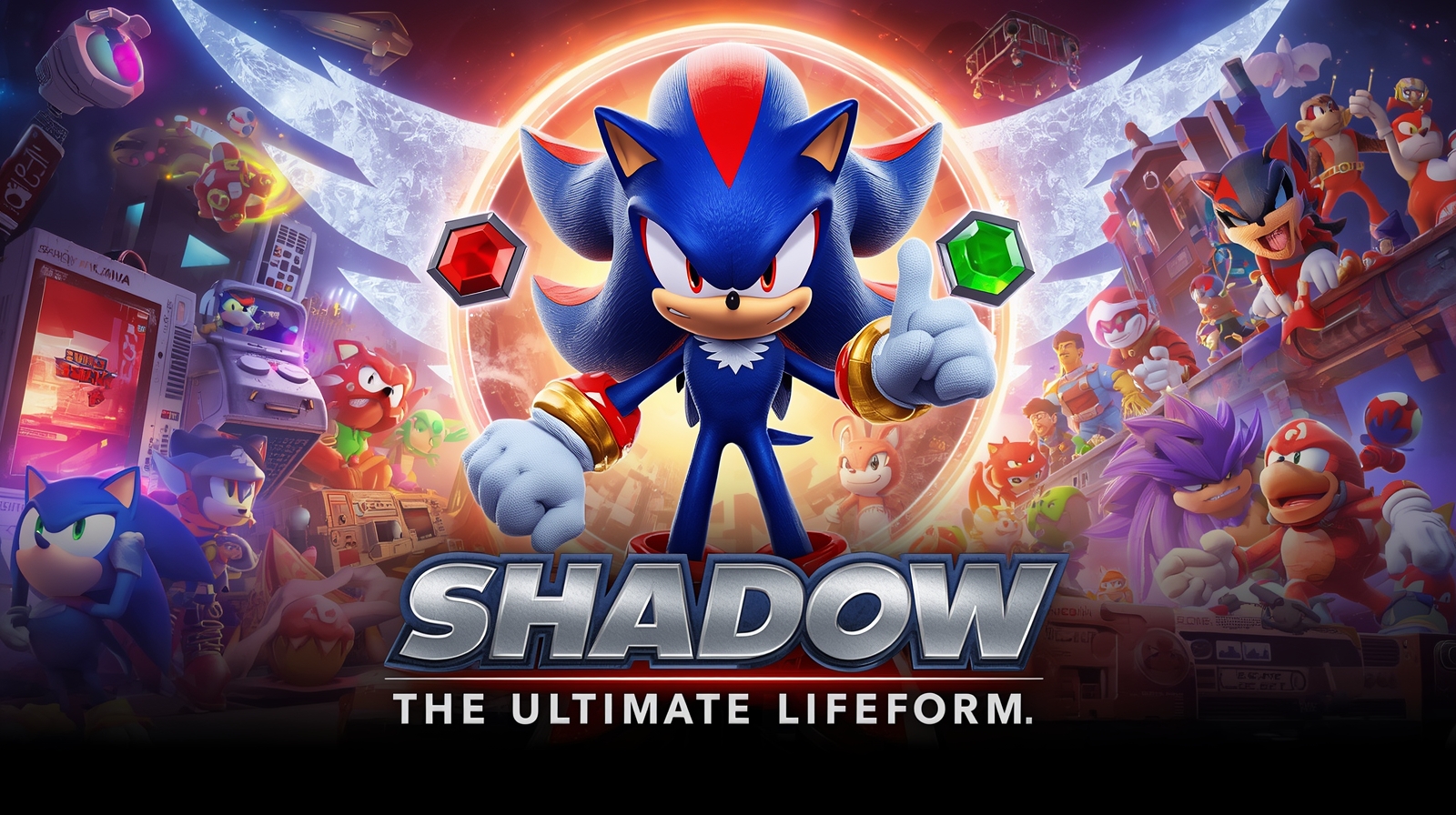
When Sega needed a character who could match Sonic’s popularity while bringing something entirely different to the table, they created Shadow the Hedgehog. First appearing in Sonic Adventure 2 back in 2001, Shadow wasn’t just another speedster in the Sonic universe. He was darker, more complex, and carried an emotional weight that the franchise had never really explored before. His tragic backstory, incredible powers, and morally ambiguous nature made him an instant hit with fans who wanted something beyond the typical hero narrative.
What makes Shadow particularly fascinating is how he challenges everything we expect from a Sonic character. While Sonic runs through levels with carefree enthusiasm, Shadow moves with purpose and precision. His black fur with distinctive red stripes wasn’t just a design choice, it was a statement. The developers at Sonic Team deliberately crafted him as a foil to Sonic’s bright blue optimism, and the contrast worked brilliantly.
The Tragic Origins of the Ultimate Lifeform
Shadow’s story begins on the Space Colony ARK, a research facility floating in orbit above Earth. Professor Gerald Robotnik, one of the most brilliant scientists in the Sonic universe, created Shadow as the culmination of his life’s work. But Gerald’s intentions weren’t sinister like his grandson Dr. Eggman’s would later become. The professor wanted to develop a being capable of helping humanity achieve medical breakthroughs, possibly even finding a cure for incurable diseases or unlocking the secret to eternal life.
The creation mythology surrounding Shadow is deeply tied to his relationship with Maria Robotnik, Gerald’s granddaughter. Maria suffered from a terminal illness, and her presence on the ARK gave Shadow something he wasn’t designed to have: genuine emotional connections. She became his closest friend, maybe his only friend, and their bond shaped everything about who Shadow would become. Maria saw past the “Ultimate Lifeform” label and treated him like family.
Everything changed when government forces raided the Space Colony ARK. The exact reasons for the raid vary depending on which version of the story you’re following, but the outcome remained tragically consistent. During the chaos, Maria was shot by soldiers. In her final moments, she made Shadow promise to protect humanity and give people a chance to be happy. That promise became the core of Shadow’s entire existence, even when he couldn’t remember why he felt compelled to protect a world that had taken everything from him.
This tragic backstory wasn’t just emotional backstory for the sake of drama. It fundamentally changed how Sonic games could tell stories. Before Shadow, most characters in the franchise had pretty straightforward motivations. Shadow introduced moral conflict, grief, redemption arcs, and the kind of character development that made players genuinely invested in his journey rather than just enjoying the gameplay mechanics.
Chaos Powers That Define the Ultimate Lifeform
Shadow’s abilities go way beyond just running fast, although he can absolutely match Sonic’s legendary speed when he needs to. His most distinctive feature is his pair of hover shoes, which aren’t just cool-looking accessories. These technologically advanced shoes let him glide across surfaces with a smoothness that gives him a completely different movement style compared to Sonic’s momentum-based running. The hover shoes also enable Shadow to perform devastating high-speed attacks where he essentially becomes a black and red blur of destruction.
But what truly sets Shadow apart from every other character in the franchise is his mastery of Chaos Control. Using even a single Chaos Emerald, Shadow can manipulate time and space in ways that seem almost unfair. He can teleport instantly across vast distances, freeze time around him, or warp reality itself. No other character weilds this power with the same level of precision and control. It’s what makes him the Ultimate Lifeform rather than just another fast hedgehog.
His combat abilities extend into other Chaos-based attacks that showcase his connection to these mysterious emeralds. Chaos Spear lets him launch energy projectiles at enemies from a distance, essentially giving him ranged attacks in a franchise traditionally focused on close-quarters combat. Then there’s Chaos Blast, a devastating area-of-effect move that creates a massive red explosion centered on Shadow himself. These abilities fundamentally changed how boss fights and combat encounters could work in Sonic games.
When Shadow manages to gather all seven Chaos Emeralds, he undergoes a transformation into Super Shadow. In this form, his already impressive powers increase exponentially. He gains the ability to fly, his speed surpasses even Sonic’s maximum velocity, and his Chaos abilities become strong enough to challenge god-like beings. Super Shadow has appeared in several major story finales, often fighting alongside Super Sonic against threats that neither could handle alone.
What’s interesting is how Shadow’s engineered biology gives him durability that matches his offensive capabilities. He can survive in the vaccum of space, withstand impacts that would destroy normal creatures, and recover from injuries at an accelerated rate. This resilience makes him not just a glass cannon speedster but a genuinely formidable fighter who can take punishment and keep going.
Shadow’s Evolution Across Video Games
Shadow’s debut in Sonic Adventure 2 for the Dreamcast was nothing short of revolutionary for the franchise. He appeared as a mysterious antagonist who seemed to be working against Sonic, creating immediate intrigue about his true motives. The game’s dual storyline structure let players experience events from both hero and dark perspectives, with Shadow serving as Sonic’s counterpart on the dark side. His rivalry with Sonic became one of the most compelling dynamics in the series, built on mutual respect rather than pure antagonism.
The success of Shadow’s character led to something unprecedented: his own standalone game in 2005 simply titled Shadow the Hedgehog. This game took massive risks with the franchise formula. It introduced firearms and vehicles, gave players branching narrative paths with multiple endings, and explored themes of identity and morality that were surprisingly mature for a Sonic title. While critics gave it mixed reviews due to some gameplay issues and tonal inconsistencies, fans appreciated the attempt to explore Shadow’s character in depth. The game showed how much demand existed for Shadow’s story beyond just being Sonic’s dark rival.
Throughout the 2000s and beyond, Shadow appeared in nearly every major Sonic title. Sonic Heroes featured him as part of Team Dark alongside Rouge and Omega. Sonic 2006 gave him an expanded role with his own story campaign. Sonic Generations brought back classic Shadow moments for nostalgic fans. Sonic Forces positioned him as an experienced resistance fighter. Each appearance added layers to his character development while maintaining the core elements that made him compelling.
The animated series Sonic X deserves special mention for how it handled Shadow’s character. The show dedicated significant screentime to exploring his backstory with Maria, his confusion about his purpose, and his eventual acceptance of his role as protector rather than destroyer. These episodes helped many fans understand Shadow’s motivations better than the games sometimes managed, particularly younger audience members who connected with the emotional storytelling.
Shadow’s presence in comic books through both Archie Comics and the current IDW series has allowed writers to explore aspects of his personality that games can’t always address due to pacing constraints. The comics have shown him forming reluctant friendships, dealing with the psychological weight of his past, and occasionally showing vulnerability that his stoic in-game persona doesn’t always permit.
Shadow’s Cinematic Future
The announcement that Shadow would appear in the Sonic movie franchise generated incredible excitement among longtime fans. His brief appearance at the end of Sonic the Hedgehog 2 in 2022 was enough to send social media into a frenzy. The third film, released in 2024, positions Shadow as a central antagonist whose pain and anger drive the conflict. Early reactions suggest the movie captures what makes Shadow compelling: he’s not evil, he’s traumatized and misdirected.
The cinematic version appears to follow the Space Colony ARK origins closely, with Maria’s role being crucial to understanding why Shadow acts the way he does. This adherence to source material shows that the filmmakers understand what fans love about the character. Shadow works best when his actions are driven by that promise to Maria, when his aggression stems from grief rather than malice, and when there’s always the possibility of redemption lurking beneath his cold exterior.
What’s remarkable about Shadow’s longevity is how he’s remained relevant for over two decades without becoming stale. His anti-hero status gives writers flexibility that purely heroic characters don’t have. He can support Sonic in one game and oppose him in another, and both scenarios feel authentic to his character. His visual design with those striking red stripes against black fur remains instantly recognizable. His voice acting across different games and media has consistently captured that balance between threatening and sympathetic.
Shadow represents something important in gaming history: proof that franchise characters don’t need to follow a formula to succeed. He brought emotional complexity to a series known for lighthearted adventure. He introduced darker themes without compromising what made Sonic games fun. And he showed that players were hungry for characters with depth, with history, with reasons for their actions beyond just “stop the bad guy.”
As the Sonic franchise continues evolving, Shadow’s role seems secure. Whether he’s fighting alongside Sonic against greater threats, pursuing his own mysterious agendas, or simply trying to honor that promise he made to Maria so many years ago, Shadow the Hedgehog remains one of gaming’s most compelling anti-heroes. His journey from tragic creation to beloved icon shows exactly why sometimes the darkest characters cast the longest shadows.