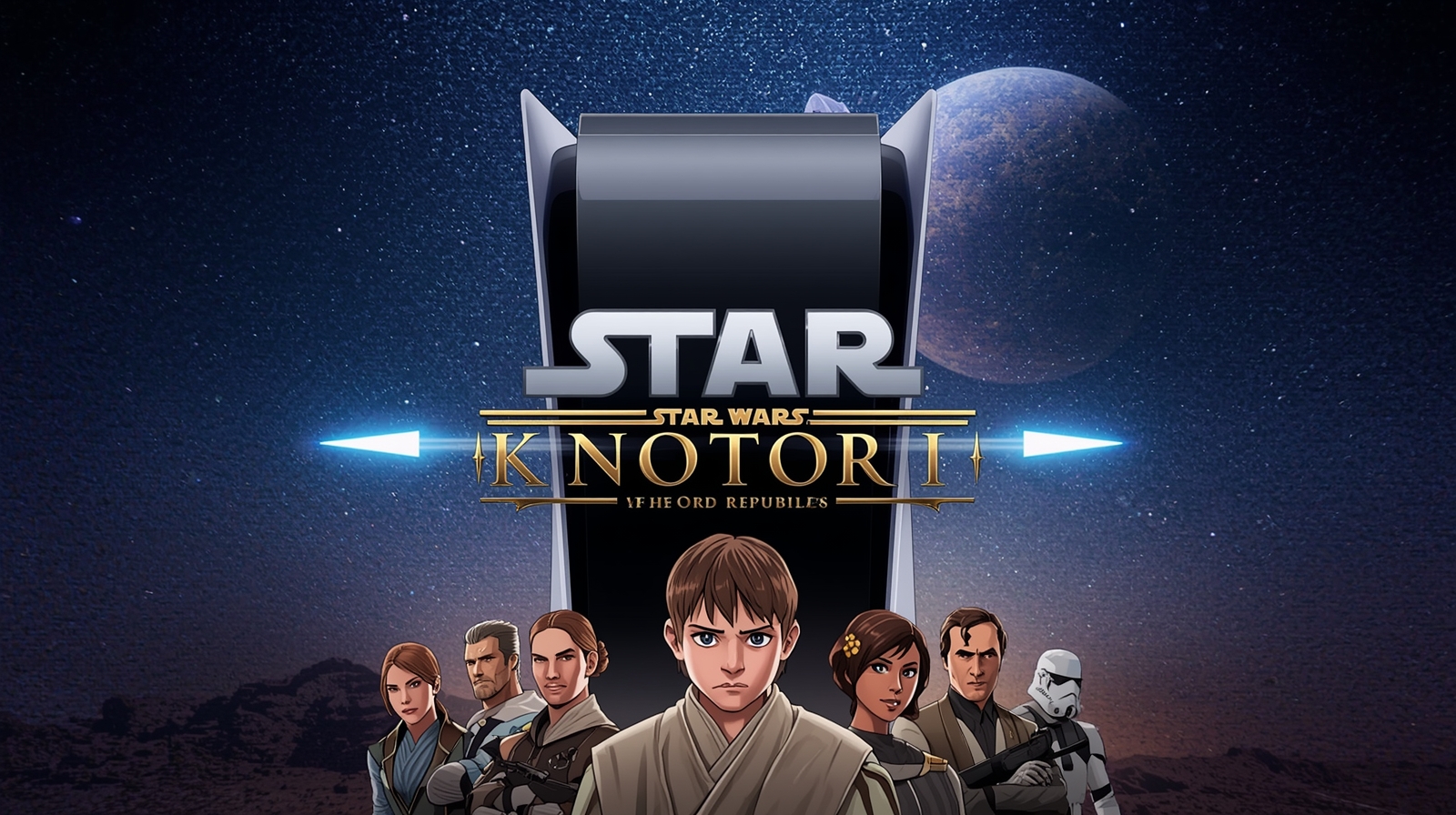
When Aspyr Media and Sony dropped the announcement during their PlayStation Showcase, the internet practically exploded with excitement. The Star Wars: Knights of the Old Republic remake for PS5 isn’t just another remaster—it’s a complete reimagining of what many consider the greatest Star Wars game ever created, and honestly one of the finest CRPGs ever developed. For those of us who spent hundreds of hours exploring the Old Republic era back in 2003, this news feels like coming home after a very long journey.
The original Knights of the Old Republic wasn’t just a game; it was an experience that fundamentally changed how we thought about interactive storytelling in the Star Wars universe. BioWare had already proven themselves with Baldur’s Gate and Neverwinter Nights, but KotOR took everything they’d learned and applied it to a galaxy far, far away. Now, more than two decades later, we’re getting a chance to revisit that beloved world with modern technology, and the implications are massive.
First Reason: Returning to the Most Fascinating Era in Star Wars History
Here’s something alot of casual Star Wars fans don’t realize—the Old Republic timeline is set approximately 4,000 years before the events of Attack of the Clones and Revenge of the Sith. This wasn’t some arbitrary decision by the developers. By setting their story so far in the past, BioWare gained creative freedom that would’ve been impossible if they were constrained by the prequel or original trilogy timelines.
The game drew heavily from the Tales of the Jedi comic series, which had established a rich mythology about ancient Sith Lords and legendary Jedi warriors. This era was characterized by massive galactic conflicts where both the Jedi and Sith operated at the height of their powers, leading to moral dilemmas and philosophical questions that the movies rarely explored in such depth. The Mandalorian Wars, the Jedi Civil War, and the fall of Revan created a narrative landscape that felt simultaneously familiar and completely fresh.
For those who played the original, the nostalgia factor cannot be overstated. I remember spending entire weekends exploring every corner of Taris, agonizing over whether to help the Undercity refugees or pursue my mission without distraction. These weren’t just simple binary choices—they had real consequences that rippled throughout the entire game. Your decisions literally shaped your character’s appearance, abilities, and ultimately the fate of the entire Republic.
The PS5 Star Wars remake promises to bring this intricate world back with ray-traced graphics, rebuilt environments, and what we’re hoping will be significantly improved gameplay mechanics while maintaining the soul of the original. BioWare’s attention to world-building was groundbreaking back in 2003, and even games released today struggle to match the depth they achieved. Every planet felt distinct, every NPC had their own story, and the sense of place was extraordinary for its time.
Second Reason: The Dark Side Has Never Been More Compelling
One aspect where Knights of the Old Republic absolutely excelled was its portrayal of the Dark Side of the Force. This wasn’t some cartoonish villainy—it was a genuine exploration of how power corrupts and how easy it is to justify terrible actions when you believe you’re serving a greater purpose. The game forced you to confront moral choices that didn’t have clear right answers, which was revolutionary for RPG elements in a licensed property.
I’ll never forget the sequence on Taris where you witness the conflict between two rival gangs, the Hidden Beks and the Black Vulkars. The game doesn’t tell you who’s “right”—instead, it presents the situation and lets you decide based on incomplete information and personal bias. Then there’s the choice about whether to help Mission Vao’s friend Griff, who turns out to be kind of a scumbag despite Mission’s loyalty to him. These moments of moral ambiguity made the game feel mature and sophisticated.
And then there’s HK-47, the homicidal assassin droid who refers to all organic beings as “meatbags.” His dialogue was pitch-perfect dark comedy, providing levity in an otherwise heavy narrative. The character became such a fan favorite that he appeared in the sequel and numerous expanded universe materials. His conversations with Bastila Shan and other party members were highlights of the entire experience, showing BioWare’s talent for character writing and voice acting integration.
The remake offers an opportunity for new players to experience these complex RPG elements that have influenced countless games since. KotOR pioneered the idea that moral choices in role-playing games should have meaningful, far-reaching consequences rather than being superficial flavor text. Games like Mass Effect and Dragon Age owe a significant debt to the systems BioWare developed here.
What made the Dark Side path particularly interesting was how it wasn’t just about being evil for evil’s sake. The game explored themes of utilitarianism, the ends justifying the means, and the corrupting nature of absolute power. You could rationalize almost any terrible action if you framed it correctly, which is disturbingly realistic and made the Light Side choices feel genuinely heroic rather than just the default option.
Third Reason: Characters That Actually Matter
The original KotOR featured some of the most memorable characters in Star Wars gaming history, brought to life through exceptional voice acting and nuanced writing. Jennifer Hale’s performance as Bastila Shan remains one of the best in the franchise—she brought depth and vulnerability to a character who could’ve easily been a one-dimensional “strong female Jedi” archetype. Bastila’s character development throughout the story was masterfully handled, showing her struggle between duty, emotion, and her growing connection to the player character.
Not every character landed perfectly, ofcourse. Mission Vao, the young Twi’lek companion, divided players pretty sharply. Some found her teenage enthusiasm refreshing and endearing, while others found her immaturity grating during serious moments. Personally, I thought she served an important purpose—she represented innocence in a galaxy that was rapidly losing it, and her eventual fate on the Dark Side path remains one of the most gut-wrenching moments in gaming.
The supporting cast was equally strong. Carth Onasi’s paranoia and trust issues created genuine tension, Jolee Bindo’s cynical wisdom provided philosophical depth, and Canderous Ordo gave us insight into Mandalorian culture years before it became central to Star Wars media. Each companion had their own questline, backstory, and opinion on your actions, making them feel like real people rather than walking stat bonuses.
What really set KotOR apart from other role-playing games of its era was how party members would interject during conversations and missions. They had relationships with each other independent of the player, creating a sense that the world existed beyond your direct interactions. This was sophisticated narrative design that many modern games still struggle to implement effectively.
The Knights of the Old Republic remake needs to maintain this character depth while potentially expanding on it with additional dialogue, more nuanced animations, and better facial expressions that modern systems allow. If they can capture even half of what made these characters special while improving the technical presentation, we’re in for something truly special.
Why This Remake Matters Beyond Nostalgia
The gaming industry has seen numerous remakes in recent years, but the PS5 Star Wars KotOR remake represents something more significant than just a graphical upgrade. This is a game that influenced an entire generation of developers and helped establish many conventions that modern RPGs take for granted. Obsidian Entertainment’s sequel, while excellent in its own right, built directly on the foundation BioWare created, and companies like Black Isle had paved the way for this kind of narrative complexity in CRPGs.
My first playthrough of Knights of the Old Republic fundamentally changed my expectations for what games could accomplish narratively. It wasn’t just about combat encounters or puzzle solving—it was about inhabiting a character and making choices that reflected your personal values. The game respected player intelligence enough to present difficult situations without obvious solutions, trusting us to engage with the material thoughtfully.
The announcement at the PlayStation Showcase brought not just excitement but also apprehension from longtime fans. What if the developers change too much? What if they modernize aspects that don’t need modernization? These concerns are valid when dealing with beloved projects that hold such a special place in gaming history. However, everything we’ve seen so far suggests Aspyr understands the assignment—they’re aiming for a faithful remake that preserves what made KotOR special while updating outdated systems and improving accessibility.
The Legacy Continues
Knights of the Old Republic stands alongside Baldur’s Gate and Neverwinter Nights as one of the defining CRPGs of its generation. The game proved that licensed properties could deliver mature, sophisticated storytelling that appealed to hardcore RPG fans while remaining accessible to Star Wars enthusiasts who’d never played a role-playing game before. It expanded the Lucasfilm-approved canon in meaningful ways and created a corner of the Star Wars universe that remains popular even after Disney’s continuity reset.
The PS5 remake arrives at an interesting moment for Star Wars gaming. With the success of Jedi: Fallen Order and the upcoming Jedi: Survivor, there’s clearly an appetite for single-player, story-driven Star Wars experiences. The Knights of the Old Republic remake could introduce an entirely new generation to one of the medium’s genuine classics while giving veterans a reason to return to the Old Republic era with fresh eyes.
Whether you’re returning to confront the Dark Side once again or experiencing this legendary CRPG for the first time, the remake represents something rare in modern gaming—a chance to preserve and celebrate a genuine masterpiece. The original achievement was remarkable for its time, and if the remake can capture even a fraction of that magic while leveraging modern technology, we’re looking at one of the most important releases in recent memory.